From commercial fishing and maritime shipping to agriculture and mountaineering, countless industries rely on high-tenacity ropes for safety and operational success. The ability of a rope to carry heavy loads, resist abrasion, and offer a long lifespan depends not only on the raw material (Nylon, PES, PP) but heavily on the twisting quality applied by the production machine.
In this article, we'll examine the fundamental physical factors that determine rope strength and how Cirmantech twisting machines elevate industrial standards in this complex process.
1. Core "Twist" Factors Affecting Rope Strength
While rope manufacturing may visually appear straightforward, wrapping filaments around each other to form a single, load-sharing strand is intricate engineering. Here are the parameters directly affecting breaking resistance:
Twist Per Meter (TPM)
TPM specifies the number of spirals introduced into a single meter of rope. Insufficient TPM prevents the fibers from locking together, resulting in slippage and early breakage under low loads. Conversely, excessive TPM forces the fibers to exert too much inner pressure, causing internal tear through friction and a loss of necessary elasticity.
Tension Control
In a multi-strand rope making machine (e.g., 3-strand or 4-strand ropes), if one strand is twisted slightly looser than the others, the entire applied load will instantly transfer to the tightest strand, causing it to snap immediately. In a perfect rope, tension must be distributed 100% equally across all strands.
2. Why is a High-Speed, Digitally Sensored Machine Necessary?
Traditional, mechanically adjusted legacy rope machines are fundamentally weak regarding the "zero-tolerance" rules mentioned above. They cause manufacturers the following headaches:
- Inability to detect tension drops caused by daily ambient temperature or humidity changes in the yarn.
- Lack of sufficient centrifugal force at low RPMs, failing to maintain the rope's tight structural geometry.
- Inconsistent quality and fluctuating TPM values across different production batches due to manual pulley adjustments.
3. The Cirmantech Edge: How YM and EXW Series Make the Difference
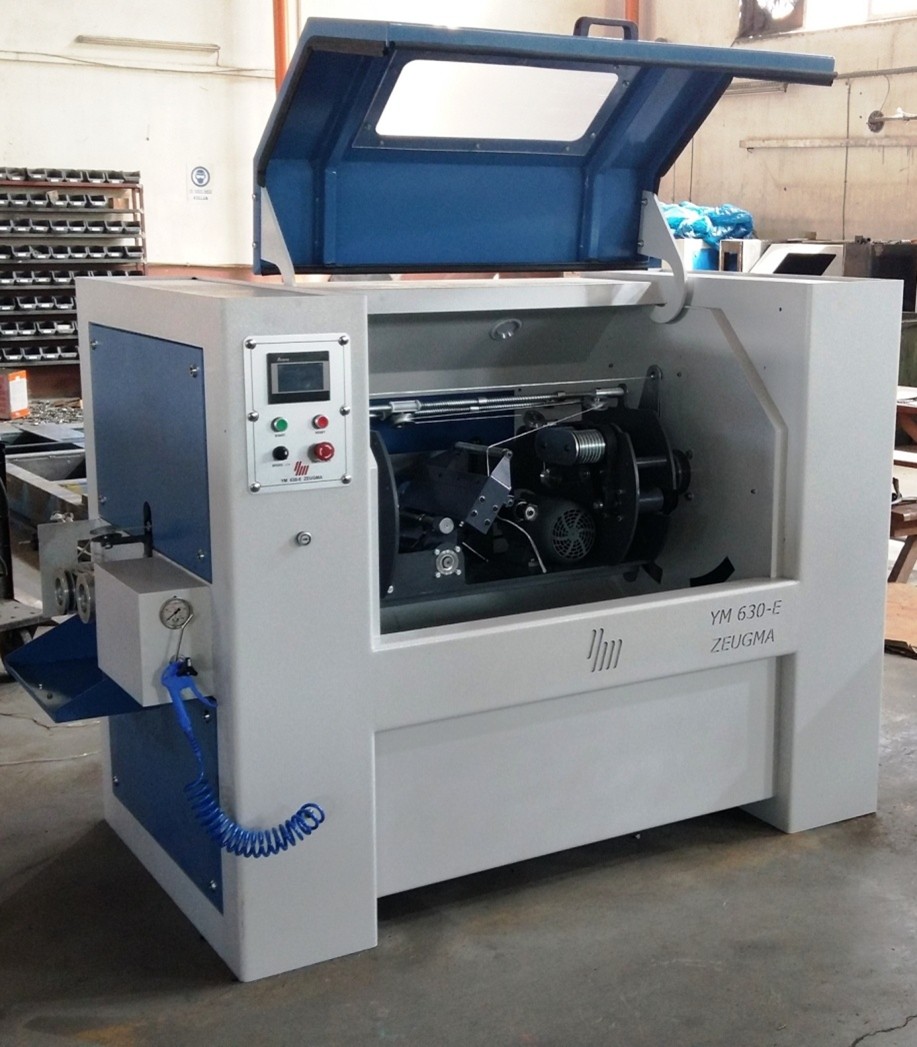
Since 2004, Cirmantech has been solving these physical hurdles through deep technological integration in its Twisting Machines and Rope Lines.
a. Digital Tension and Inverter Control
Cirmantech lines (such as the YM series or Extruder Rope Winding Lines) are equipped with
PLCs and smart multi-inverter systems. When an operator inputs a command via the screen (e.g., "Apply
exactly 20 N of tension to every strand"), the sensors update motor torque instantly, regardless of the
twisting speed (RPM) or the diminishing amount of yarn on the bobbin.
Result: No single
strand bears a disproportionate load, guaranteeing maximum breaking strength.
b. Vibration-Free High RPM (Smooth Production)
Vibration from the flyers or twisting arms inflicts severe micro-damages onto the yarn. Cirmantech's heavy mono-block steel chassis and premium bearing architecture operate on a "zero vibration" principle, even at blistering speeds of 8000 RPM. The fibers are woven seamlessly, leading to unmatched strength and a brilliant external finish.
c. Modular R&D: TwistLab Integration
Designed for major manufacturers looking to conduct high-tolerance trials rather than bulk sampling, the TwistLab series focuses on answering the question: "At which exact TPM do I achieve peak breaking strength?" with millisecond data flow and lab-grade precision.
Conclusion: Strength is Never a Coincidence
A snapped rope in a fishing net, or a failure in a construction safety line, does direct, irreversible damage to your brand's reputation in the market. No matter how premium your polymer material is, it's the "Twisting Machine" that gives the rope its true character and reliability.
To manufacture ropes and cables with higher load capacities, shinier finishes, and more consistent standards than your competitors, you must direct your investments toward the right machinery technology.
Upgrade Your Production Formula!
From Polypropylene (PP) and Nylon to Sisal... Plan the optimal twisting RPM and machinery layout perfectly tailored to your materials alongside Cirmantech's engineers.
Chat with Expert